1796 Hand-Colored Engraving of Putuo Zongcheng Temple, China — Henry William Parish & Joseph H. Baker, Published by George Nicol
An exceptional eighteenth-century hand-colored engraving depicting the plan, section, and elevation of Putuo Zongcheng Temple, the celebrated Buddhist temple complex at Chengde, China. Published in London on 12 April 1796 under the original title *Plan, Section and Elevation of the Poo-Ta-La, or Temple of the Lama at Zhe-Hol in Tartary, this historically significant architectural print offers a fascinating record of European interest in Chinese architecture and imperial culture during the late eighteenth century.
The architectural drawing is attributed to Henry William Parish, with the engraving executed by Joseph H. Baker of Islington and published by George Nicol of London. The work is associated with the illustrated account of Lord Macartney's embassy to the Qing imperial court, published as Sir George Leonard Staunton's "An Authentic Account of an Embassy from the King of Great Britain to the Emperor of China".
Completed in 1771, Putuo Zongcheng Temple was constructed under the Qianlong Emperor and modeled in part on Tibet's celebrated Potala Palace in Lhasa. The temple's imposing architecture reflects the Qing dynasty's engagement with Tibetan Buddhism and the cultural and political relationships that shaped imperial China. This engraving documents the complex through detailed architectural plans, sections, and elevations rather than a conventional pictorial view, making it particularly appealing to collectors interested in architectural history, Chinese art, and early European accounts of East Asia.
An original 1796 impression, the engraving bears the contemporary publication imprint and is hand-colored. The image measures approximately 12 × 15.25 inches and is presented in an attractive, substantial frame measuring 21 × 24.5 inches overall. A generous green mat with gold-leaf detailing complements the engraving, while the slim laminated wood frame provides a restrained presentation.
The reverse retains two Hong Kong labels: Art Frame Gallery, with addresses on Hollywood Road and Caine Road, and Altfield Fine Arts. These labels add an intriguing dimension to the print's later history and suggest a connection with Hong Kong's art and framing trade. The precise date and circumstances of this association remain undocumented. The work was subsequently acquired from a Washington, DC-area estate.
The engraving is in excellent overall condition, with slight foxing visible on the print. It remains attractively presented behind ordinary glass.
A compelling opportunity to acquire a genuine eighteenth-century architectural engraving documenting one of China's most remarkable Buddhist temple complexes, combining historical significance, fine architectural detail, and an elegant framed presentation.
Details
Title: Plan, Section and Elevation of the Poo Ta La, or Temple of the Lama at Zhe Hol in Tartary
Modern identification: Putuo Zongcheng Temple, Chengde, China
Date: Published 12 April 1797
Artist / draughtsman: Henry William Parish
Engraver: Joseph H. Baker, Islington
Publisher: George Nicol, London
Medium: Engraving with hand coloring
Subject: Chinese Buddhist architecture, topography, and Qing dynasty history
Image dimensions: 12 × 15.25 inches
Framed dimensions: 21 × 24.5 inches
Presentation: Generous green matte with gold leaf detailing; laminated wood frame
Labels: Art Frame Gallery, Hong Kong; Altfield Fine Arts
Condition: Excellent overall, with slight foxing. slight frame chips
Glazing: glass
Institutional reference: British Government Art Collection, GAC 16990
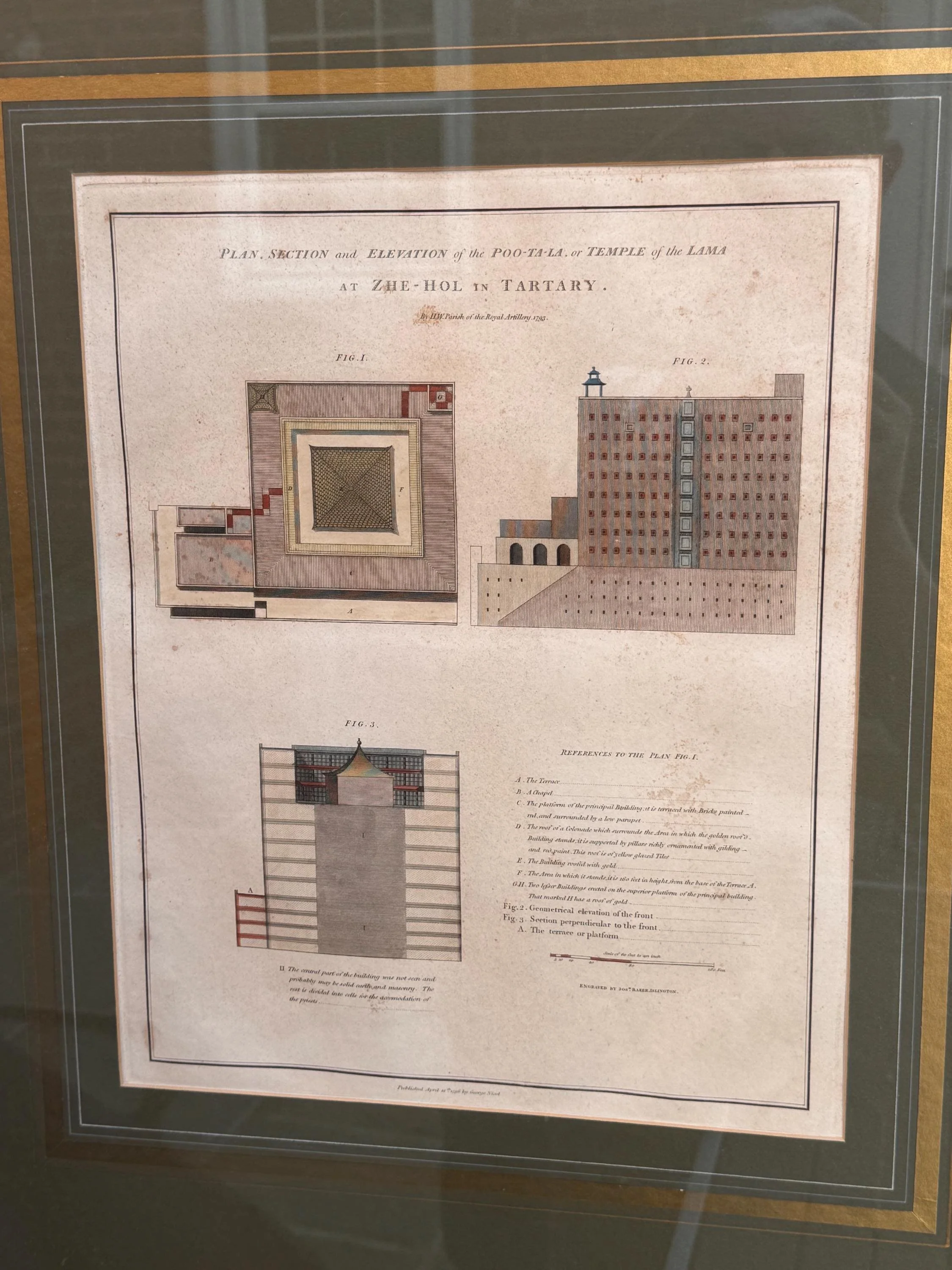 Image 1 of 10
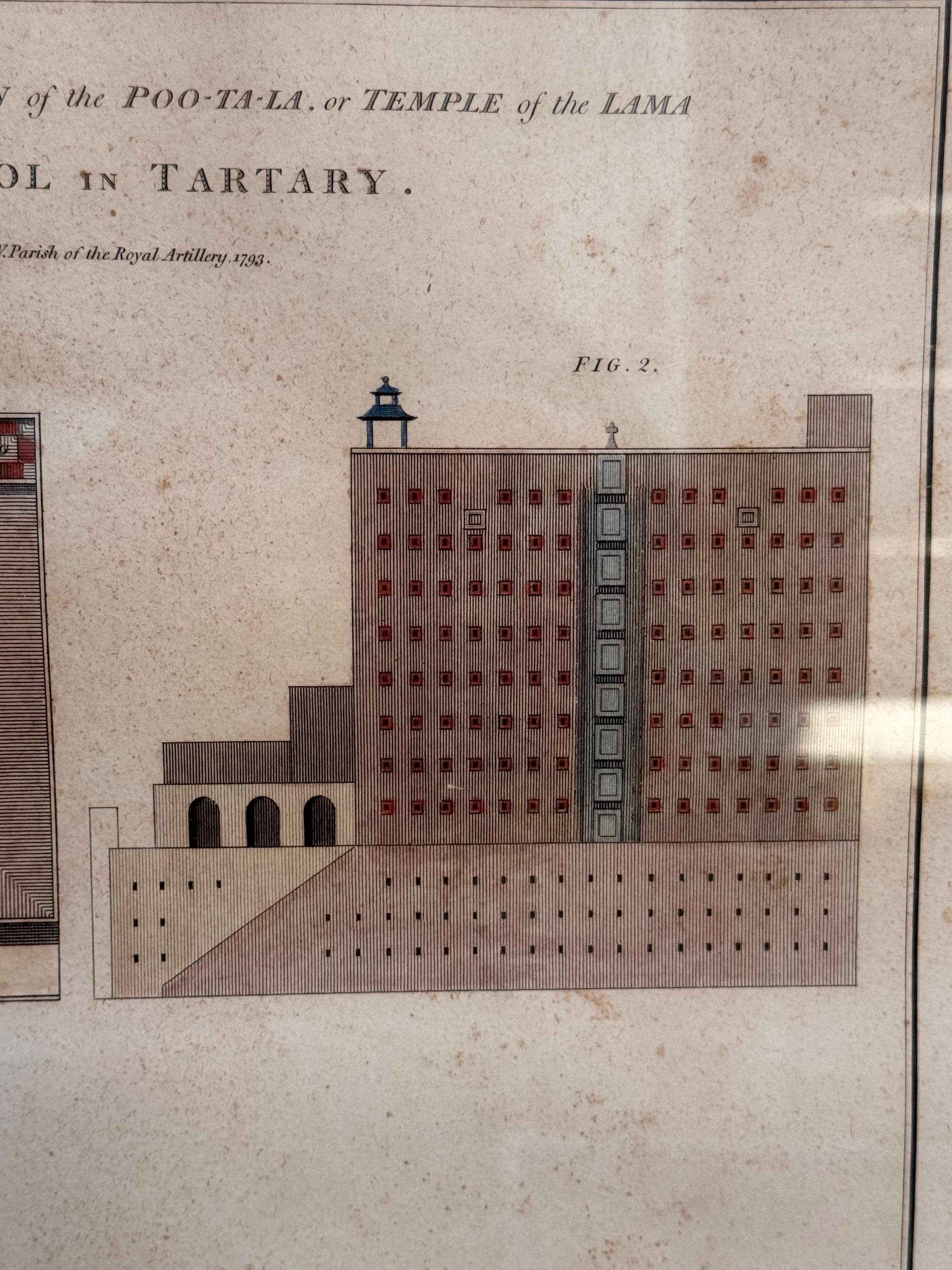 Image 2 of 10
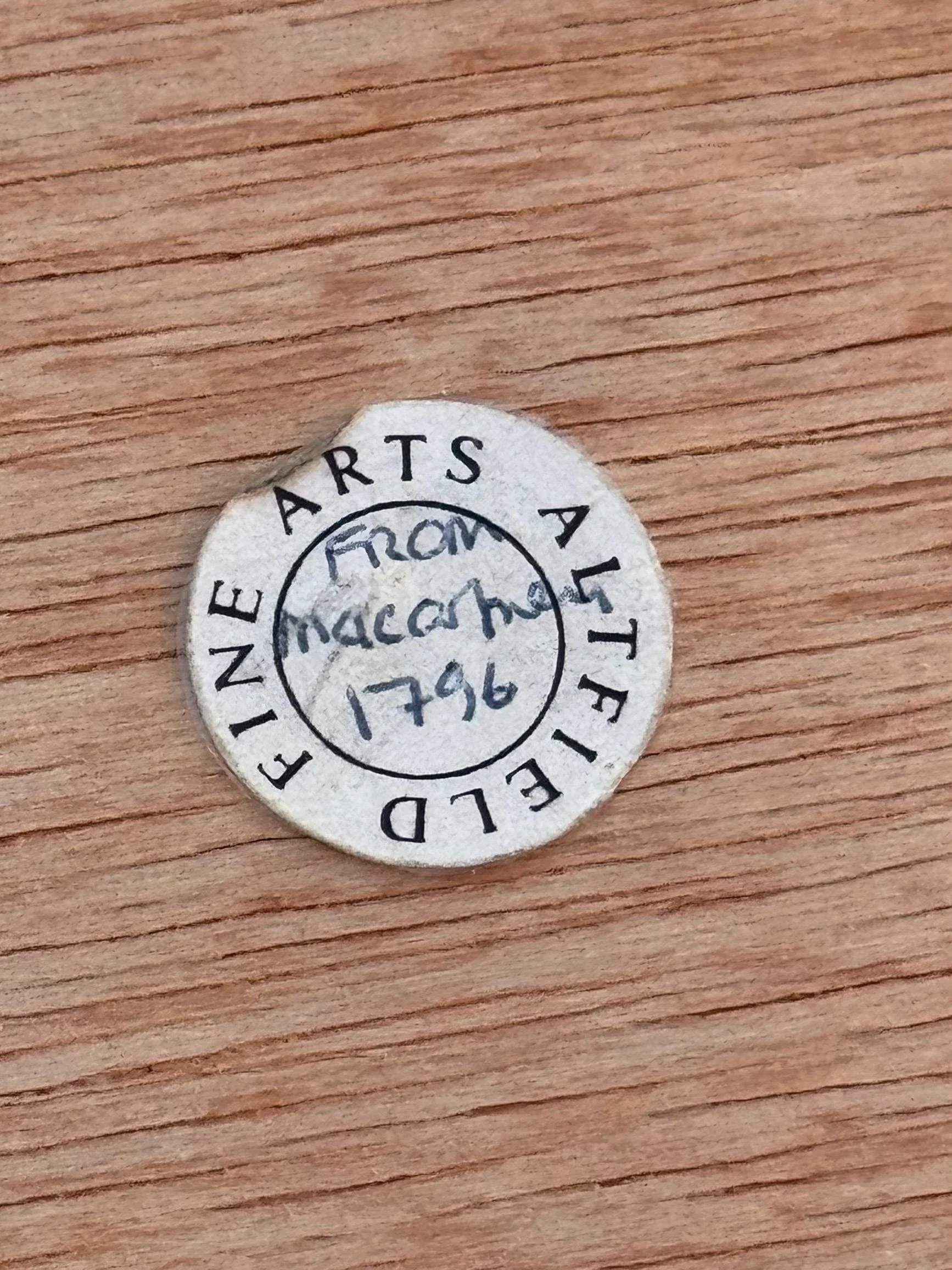 Image 3 of 10
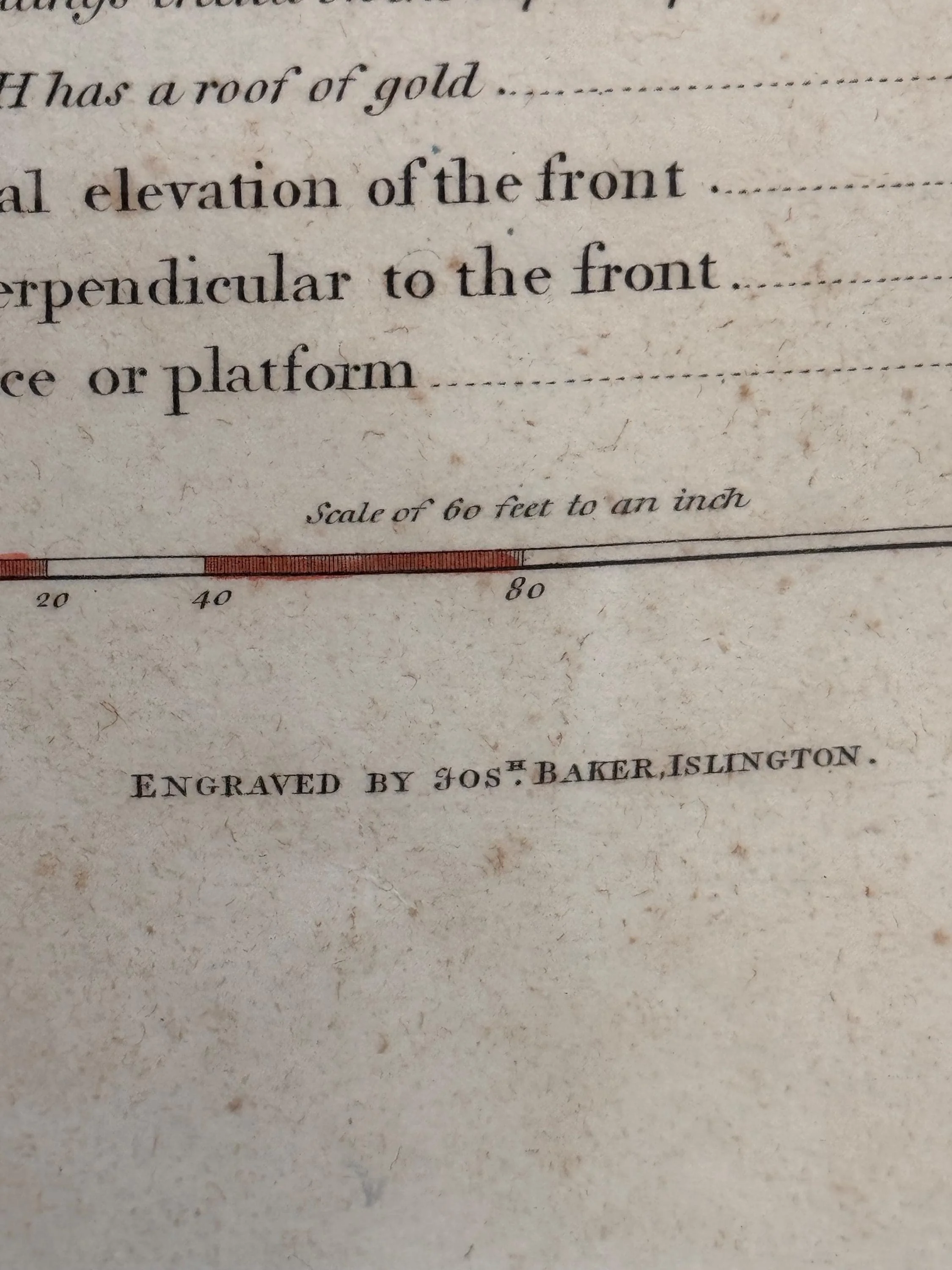 Image 4 of 10
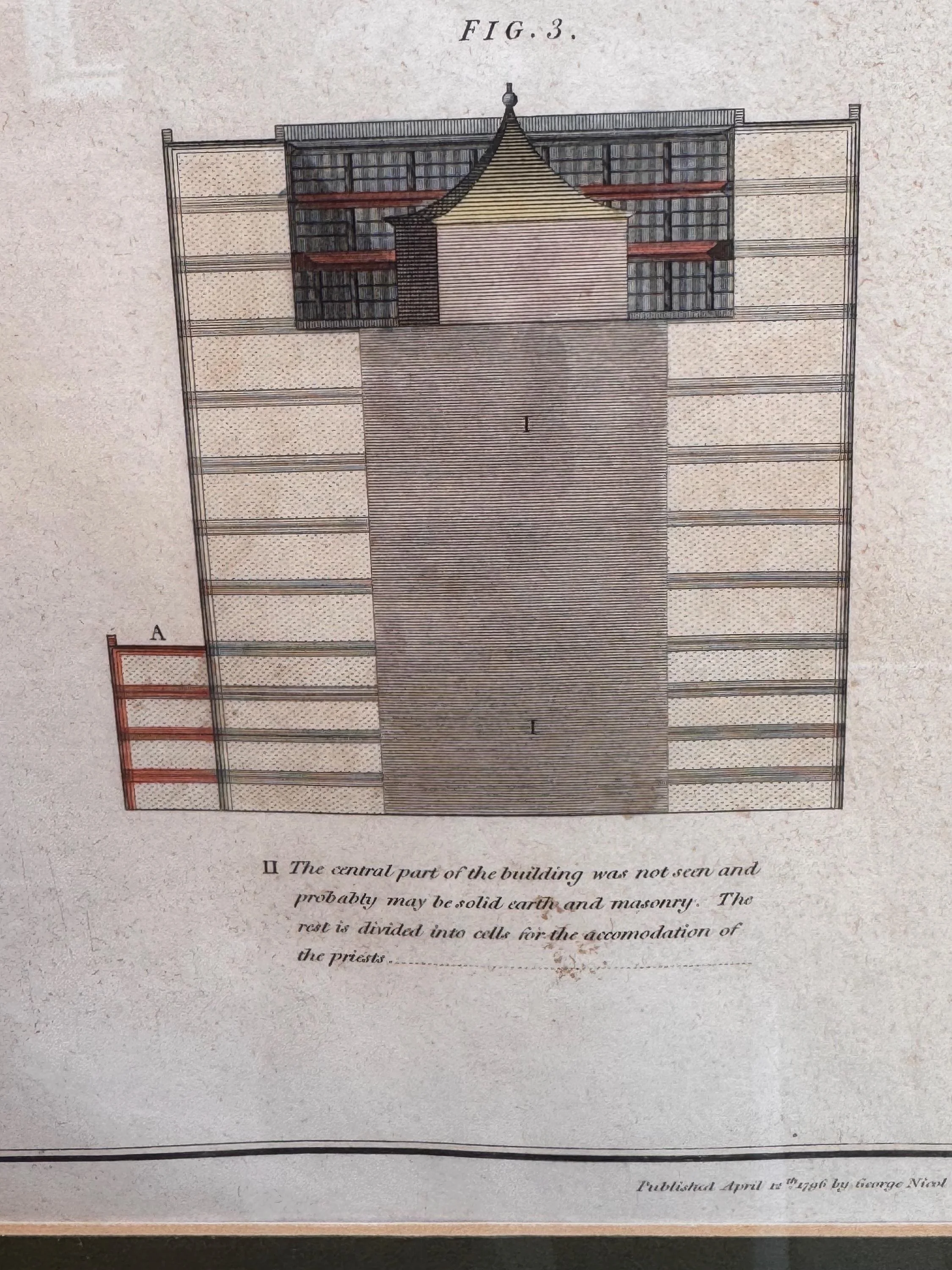 Image 5 of 10
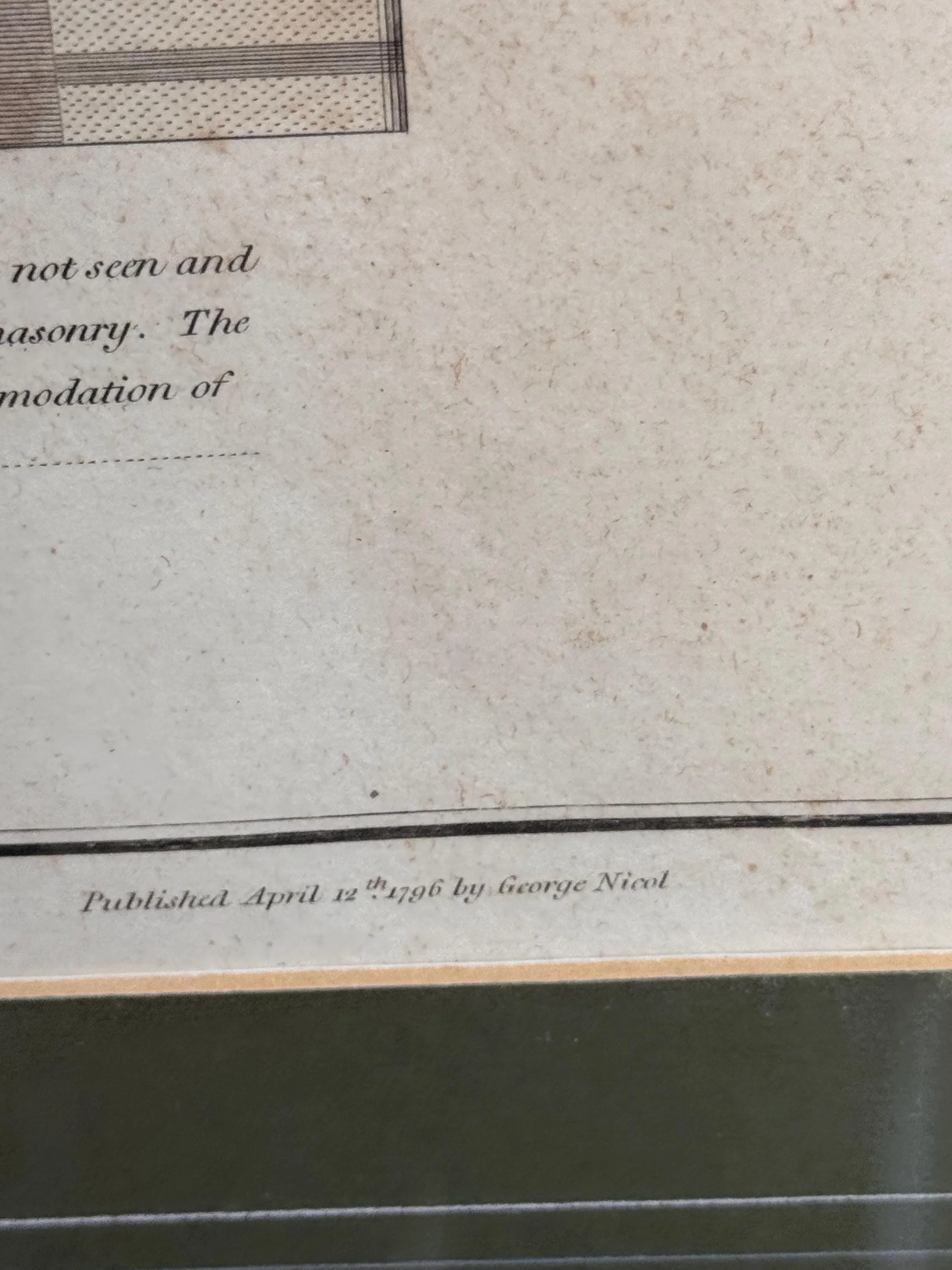 Image 6 of 10
 Image 7 of 10
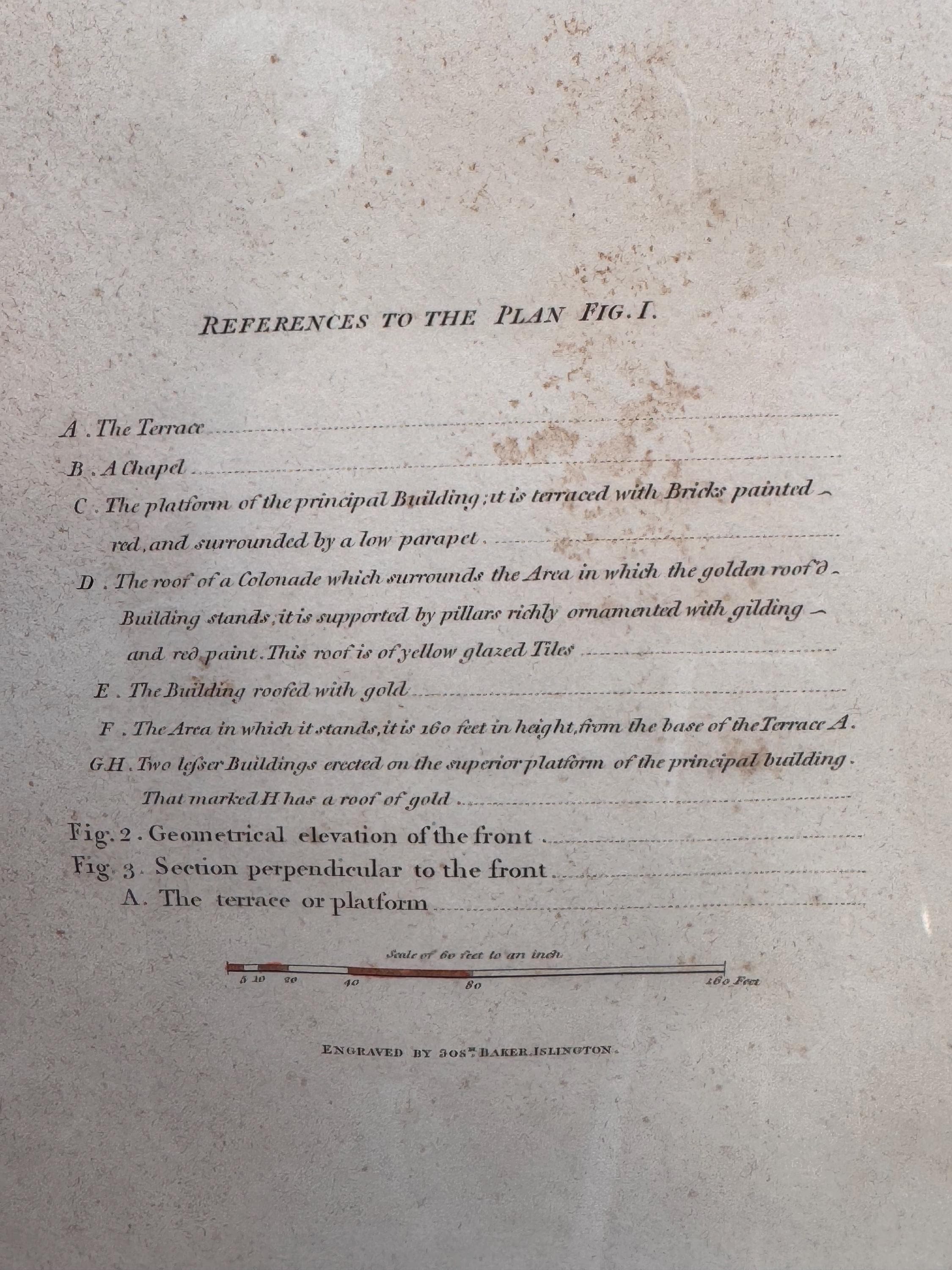 Image 8 of 10
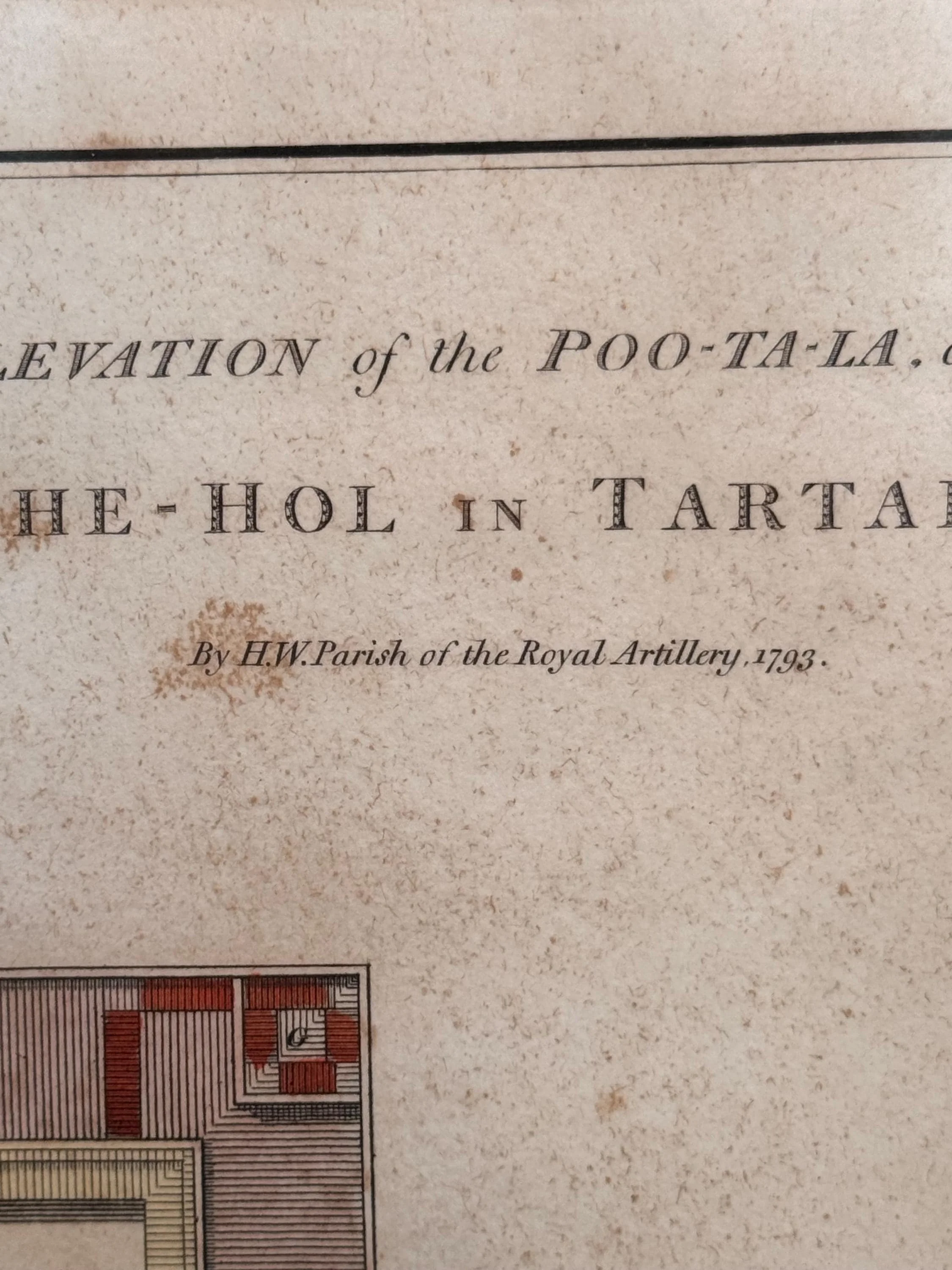 Image 9 of 10
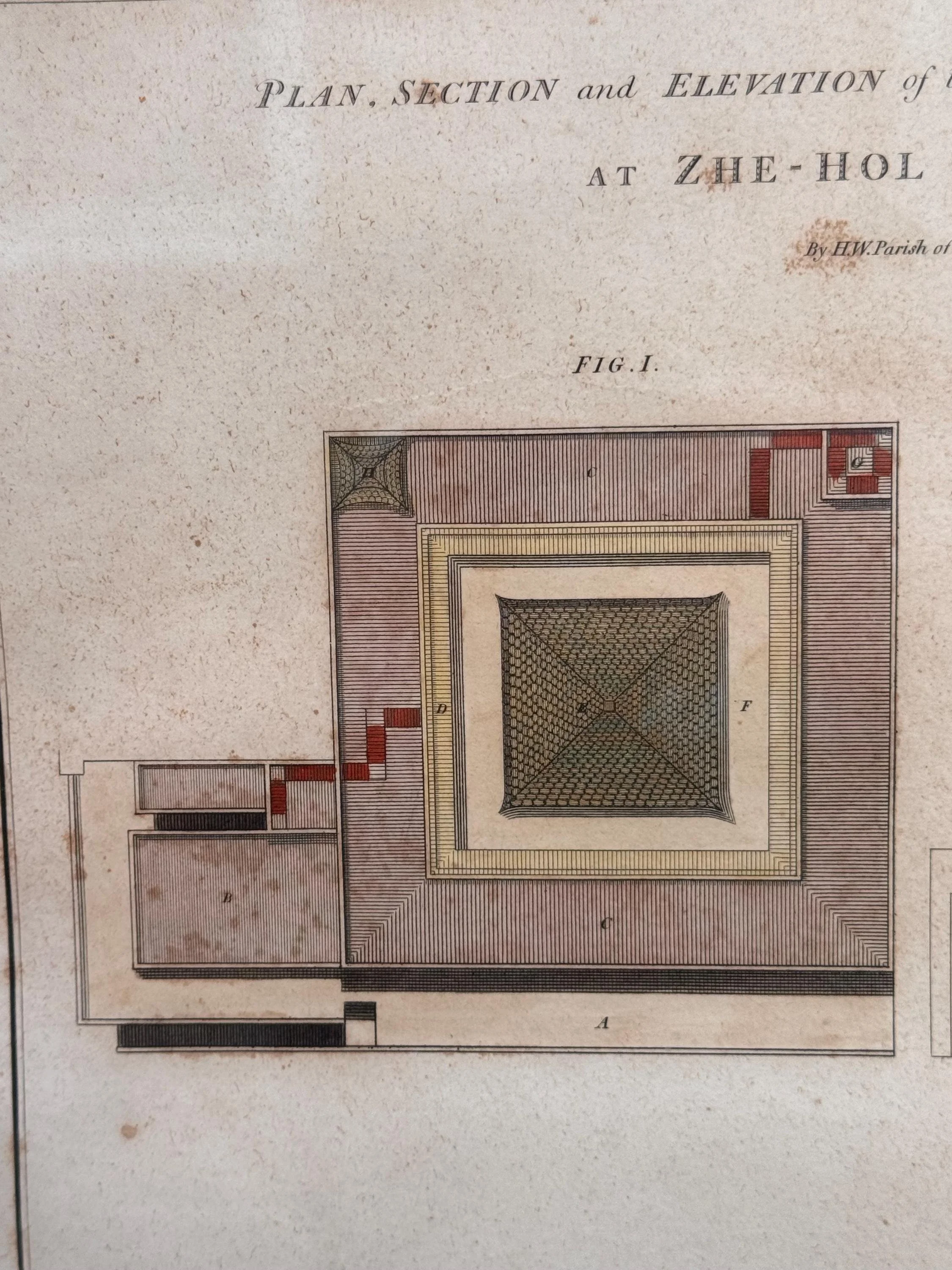 Image 10 of 10