1813 Acts Passed at the First Session of the Thirteenth Congress, 1813 — Early American Imprint in Original Wrappers (James Madison)
This very scarce authentic government printing includes the statutes approved by President James Madison and covers national defense, naval appropriations, and wartime legislation. An exceptionally well-preserved example of an early U.S. session laws volume—far superior to most surviving copies, which are typically foxed or defective.
The book remains complete, tight, and clean, showing only minor toning consistent with age. A fine piece of Americana, suitable for collectors of early U.S. law, Federal period printing, or War of 1812 materials.
Ships carefully protected and insured.
Some of the more important Acts passed:
1. Act to Encourage Enlistments in the Army of the United States (January 29, 1813)
Expanded enlistment bounties and terms to strengthen the U.S. Army during the War of 1812. Provided financial incentives for men to join and re-enlist — a major mobilization measure for the conflict with Britain.
2. Act for the Better Regulation of the Ordnance Department (February 8, 1813)
Organized the U.S. Ordnance Department to manage arms, munitions, and arsenals more efficiently. This became a key step in formalizing America’s military logistics system.
3. Act to Establish a Corps of Engineers for the Northwestern Army (March 3, 1813)
Created a specialized engineer corps to construct fortifications and defenses in the western frontier regions—crucial to frontier campaigns against British and Native forces.
4. Act Supplementary to the Act for the Regulation of the Navy (March 3, 1813)
Authorized the construction of additional naval vessels and expanded officer ranks, reflecting the growing importance of naval power after early victories on the Great Lakes.
5. Act to Raise Additional Military Force (January 29, 1813)
Authorized new regiments of infantry, dragoons, and artillery. This expanded the U.S. standing army significantly and laid groundwork for later professionalization.
6. Act to Authorize a Loan for the Support of Government (March 4, 1813)
Approved borrowing up to $16 million to fund the war effort — a massive sum for the time. This act was vital for keeping the war financially afloat.
7. Act for the Assessment and Collection of Direct Taxes (August 2, 1813)
Instituted a direct federal tax on land, houses, and slaves to raise revenue for the war — one of the first large-scale direct taxes in U.S. history. Extremely controversial and politically important.
8. Act to Provide Additional Revenues for Defraying the Expenses of Government and Maintaining the Public Credit (August 2, 1813)
Raised duties on imports and internal items to strengthen national finances during wartime shortages and blockades.
9. Act Authorizing the President to Call on the States for Militia (February 28, 1813)
Formalized the president’s authority to request militia service for defense, giving legal backing to wartime mobilizations of state militias.
10. Acts Establishing New Post Roads and Post Offices
Though routine, these extended federal reach into frontier territories — significant for communication during wartime.
Check out some of my other books here:
https://www.etsy.com/shop/DCSILVERSHOP?ref=shop_sugg§ion_id=29392957
Or just browse around the shop!
https://www.etsy.com/shop/DCSILVERSHOP
 Image 1 of 8
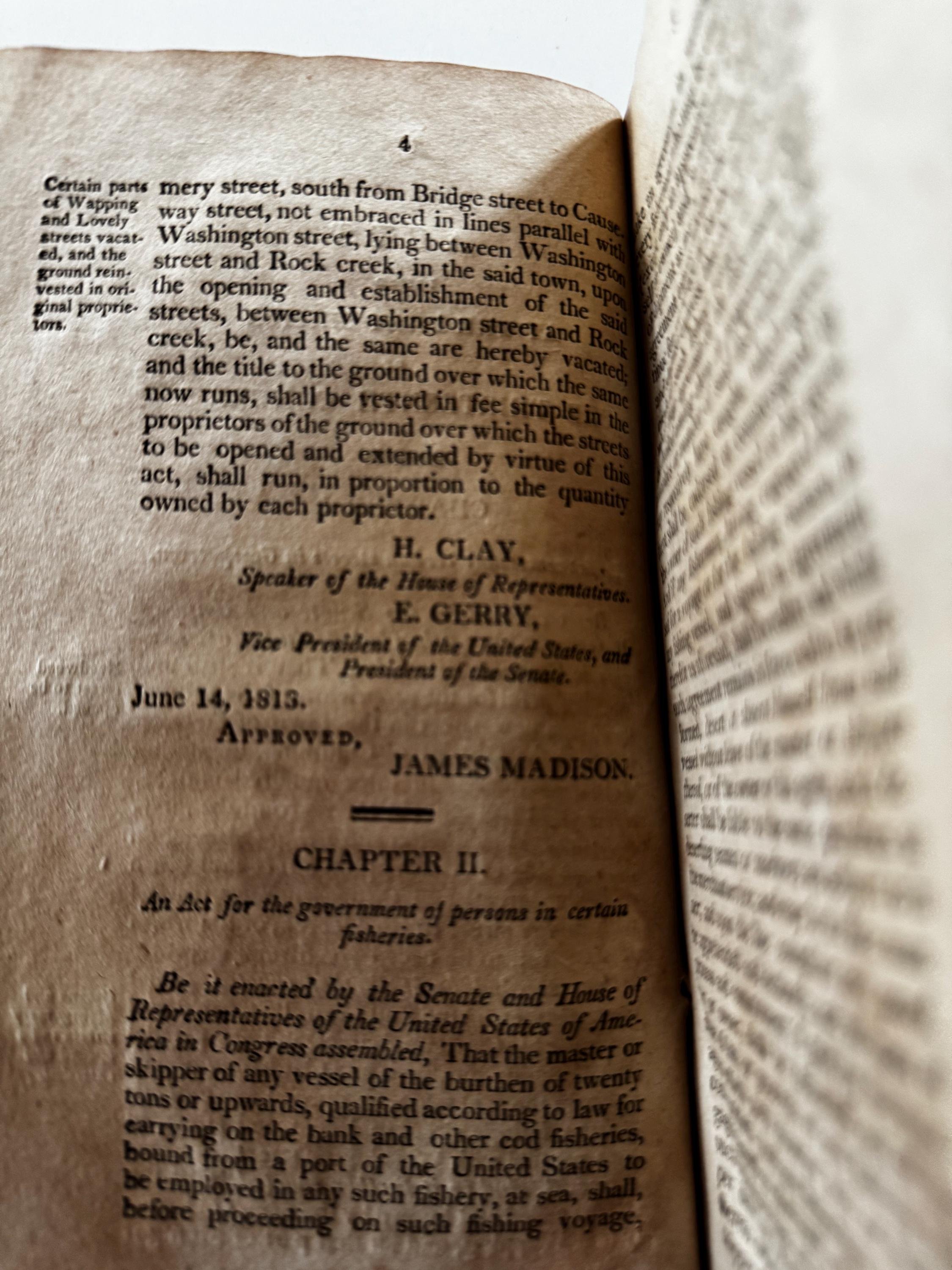 Image 2 of 8
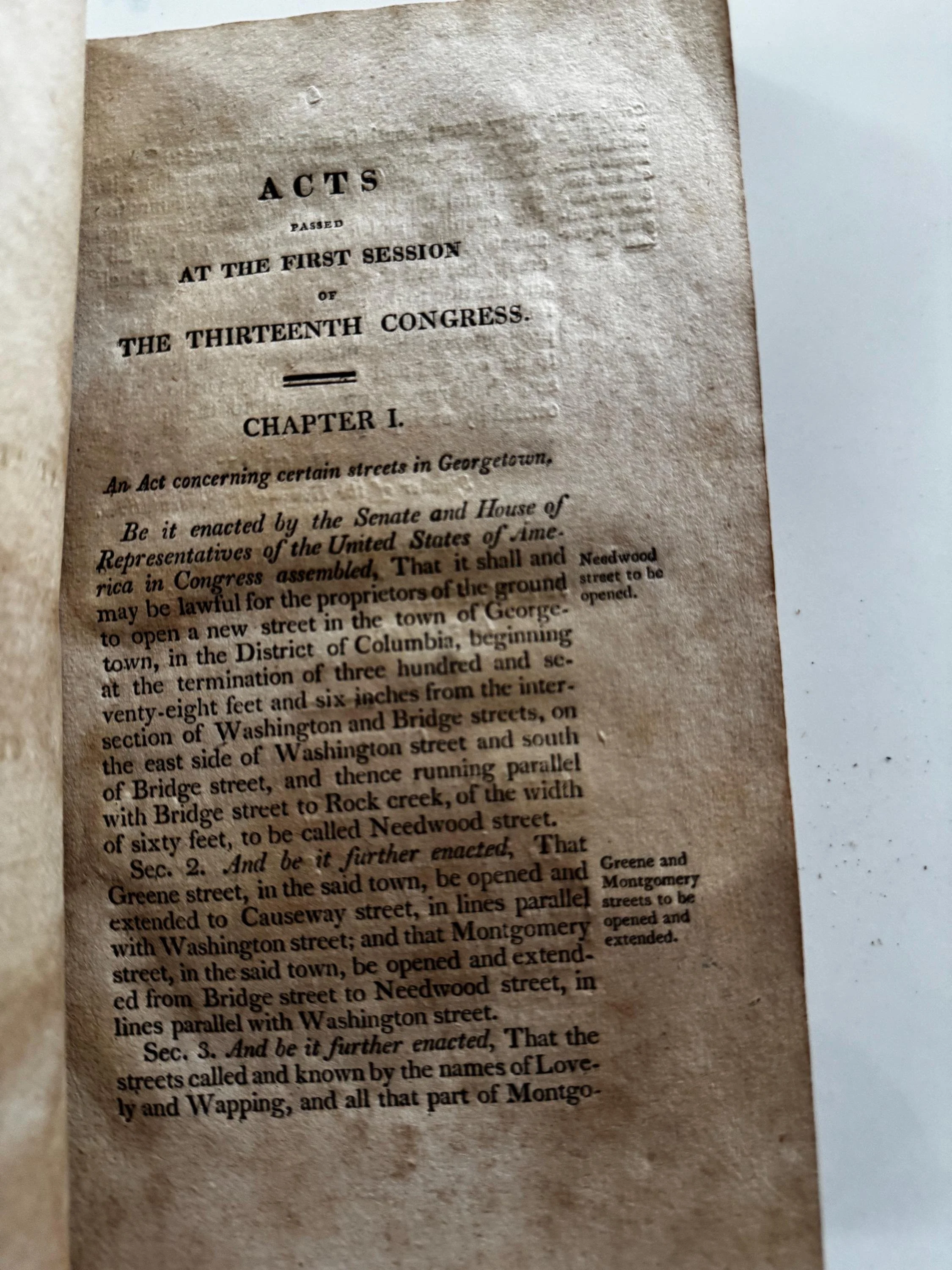 Image 3 of 8
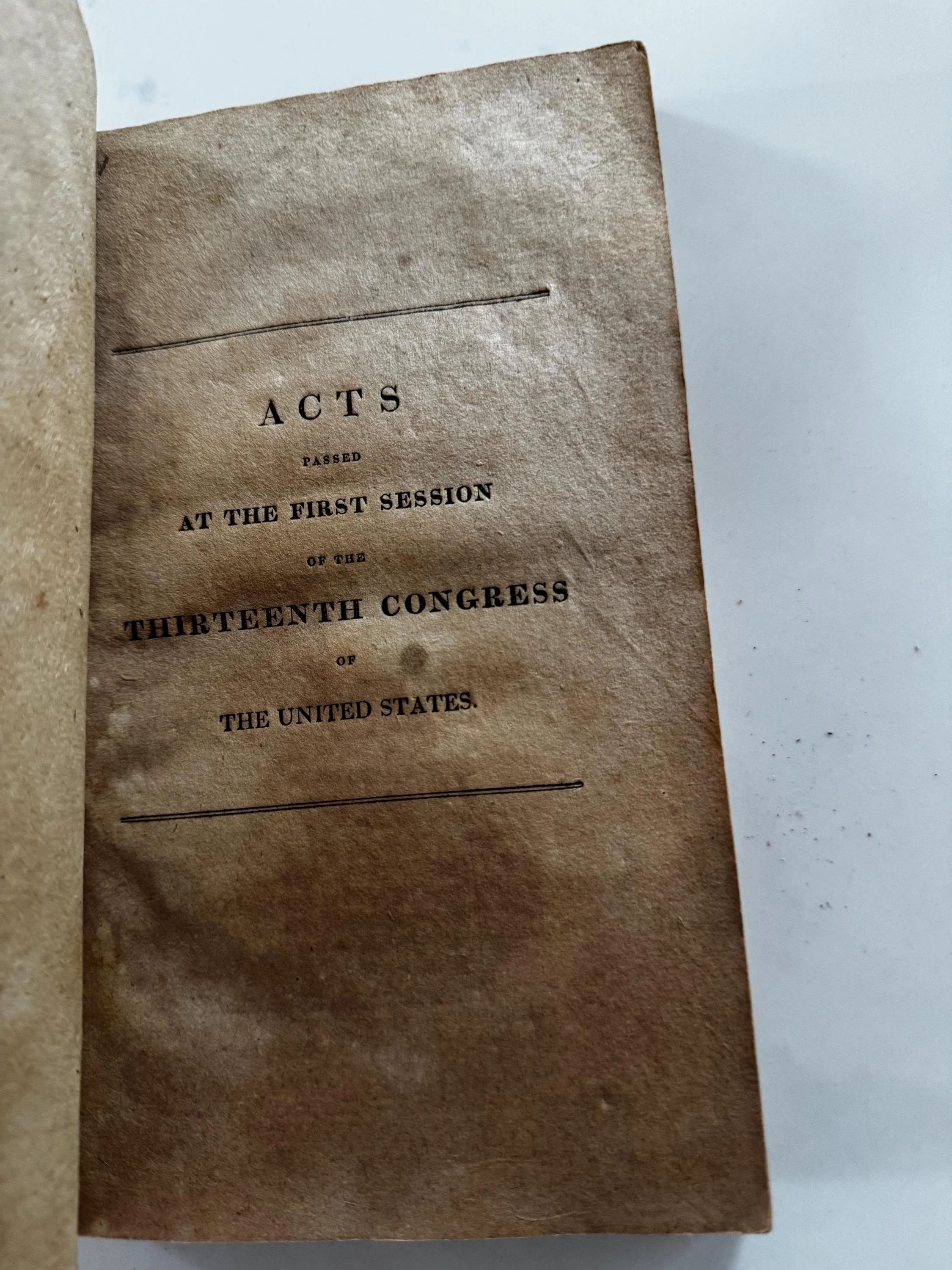 Image 4 of 8
 Image 5 of 8
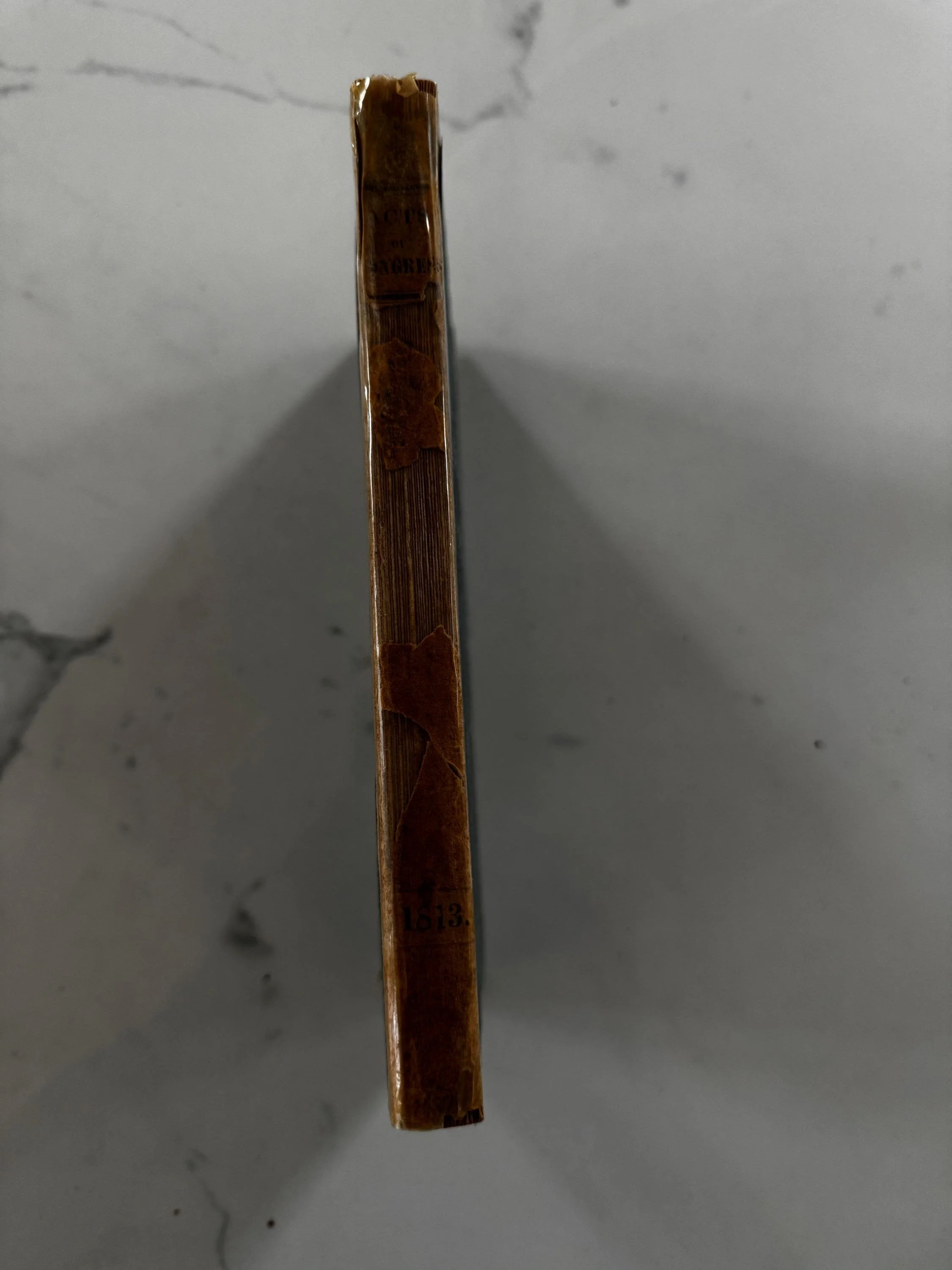 Image 6 of 8
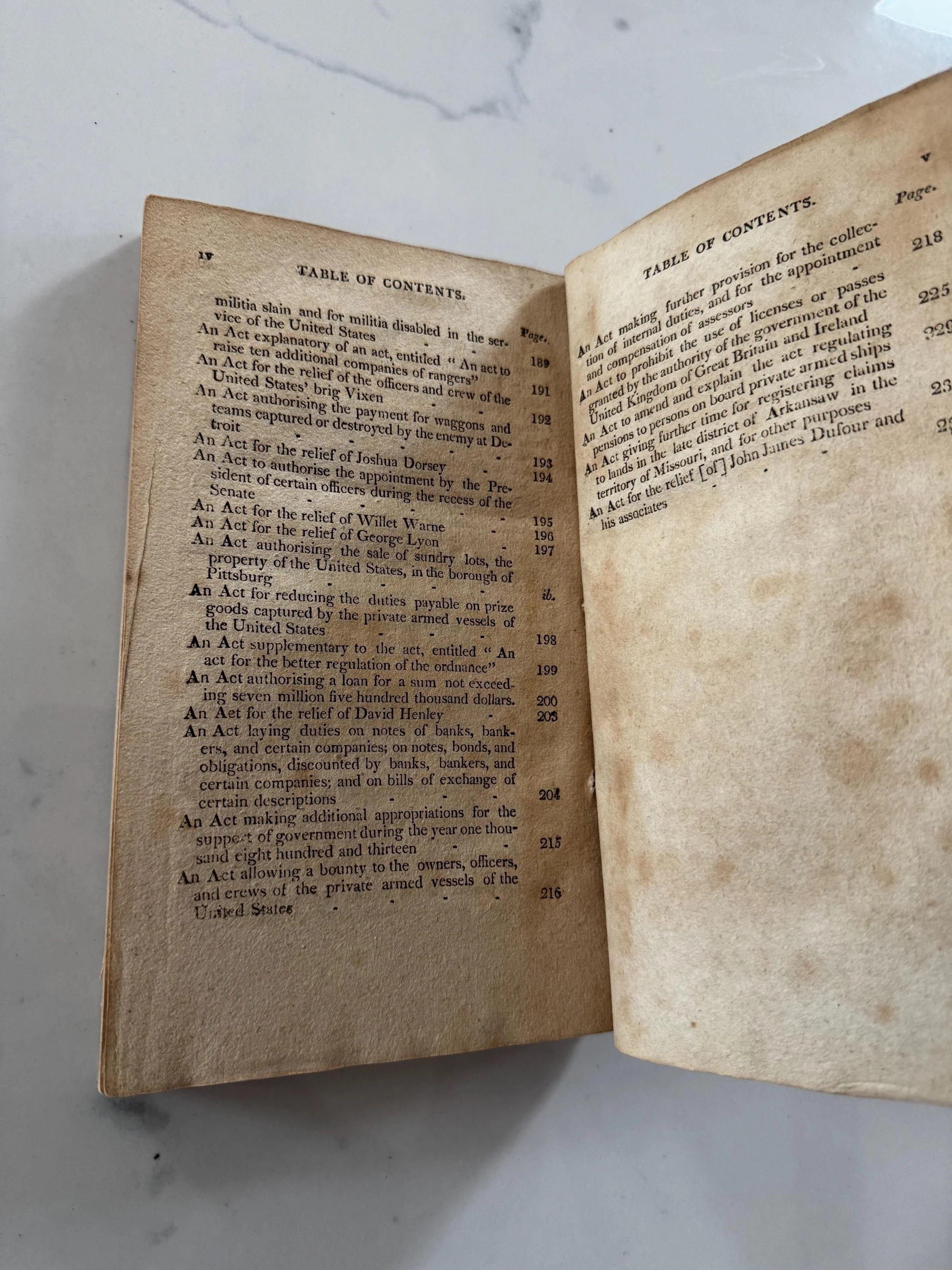 Image 7 of 8
 Image 8 of 8