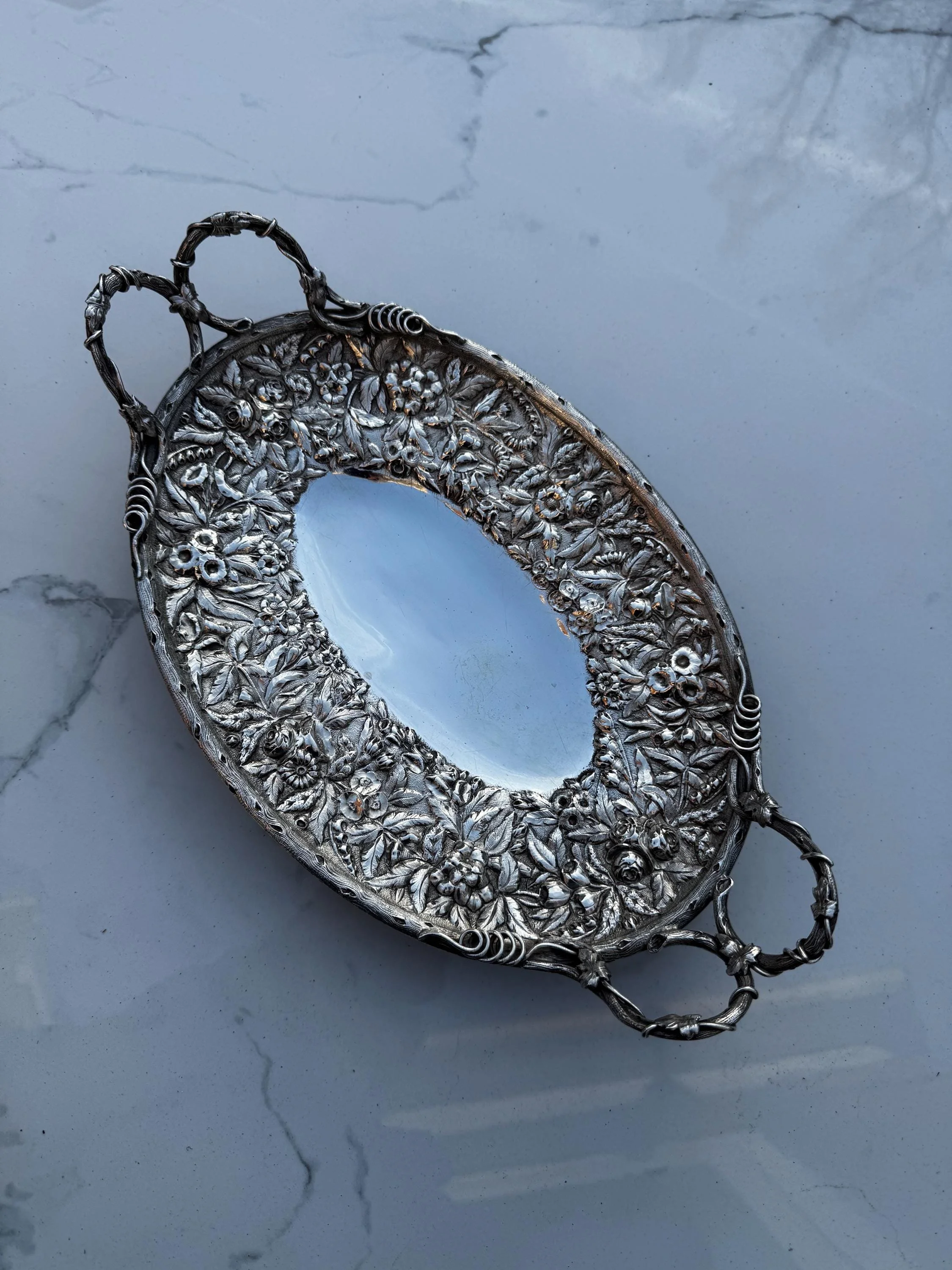
1880–1890 S. Kirk & Son Antique Coin Silver Bread or Fruit Tray, Baltimore, Maryland 11 OZ (616 g)
$3,000.00
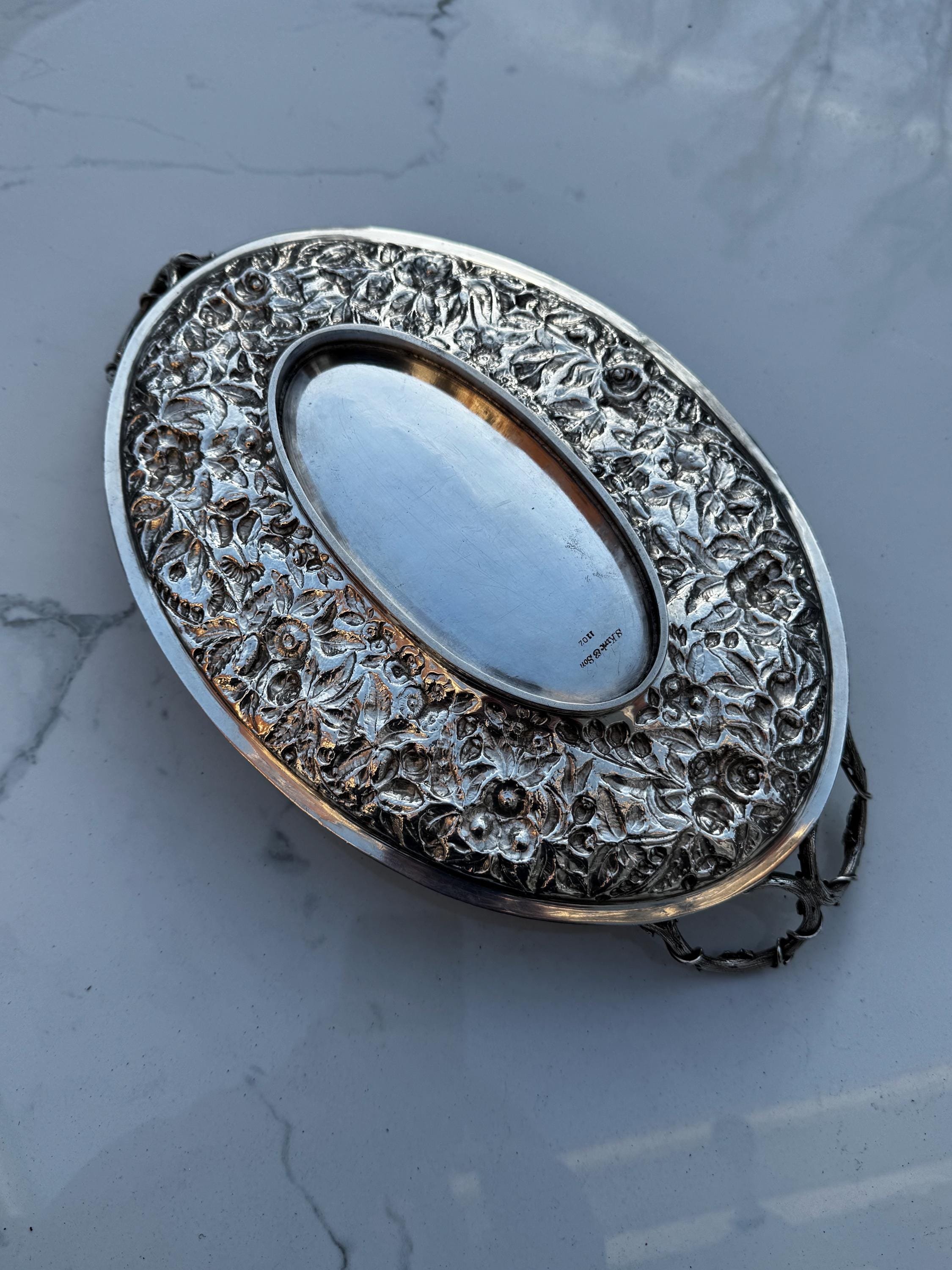
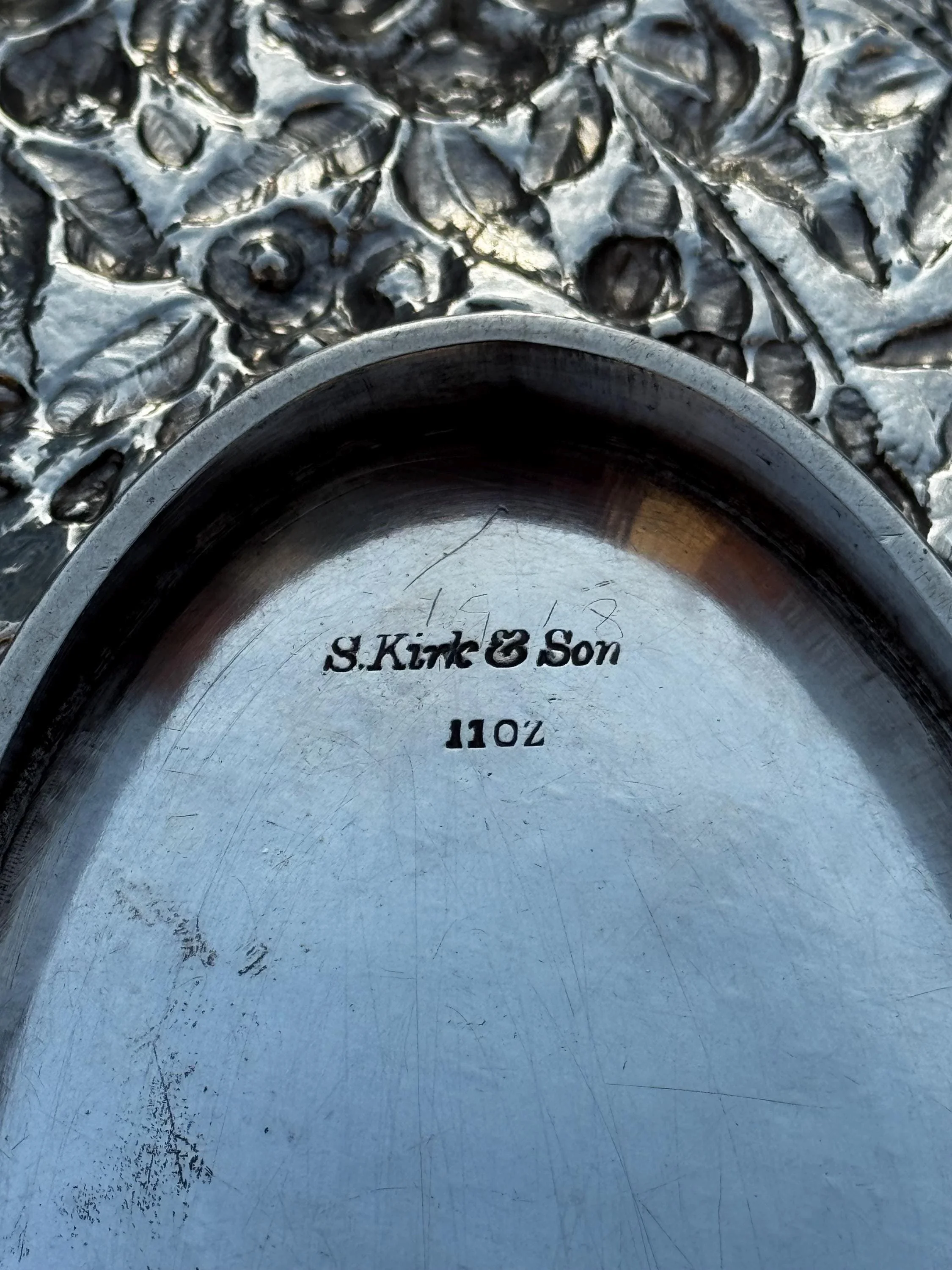
An exceptional example of 19th-century American silversmithing from the venerable workshop of S. Kirk & Son, this sterling silver bread or fruit tray embodies the firm’s celebrated repoussé tradition — the hallmark of Baltimore silver in the late Victorian era. Marked 'S. Kirk & Son' and '11 OZ' (11oz is 91.66% pure coin silver).
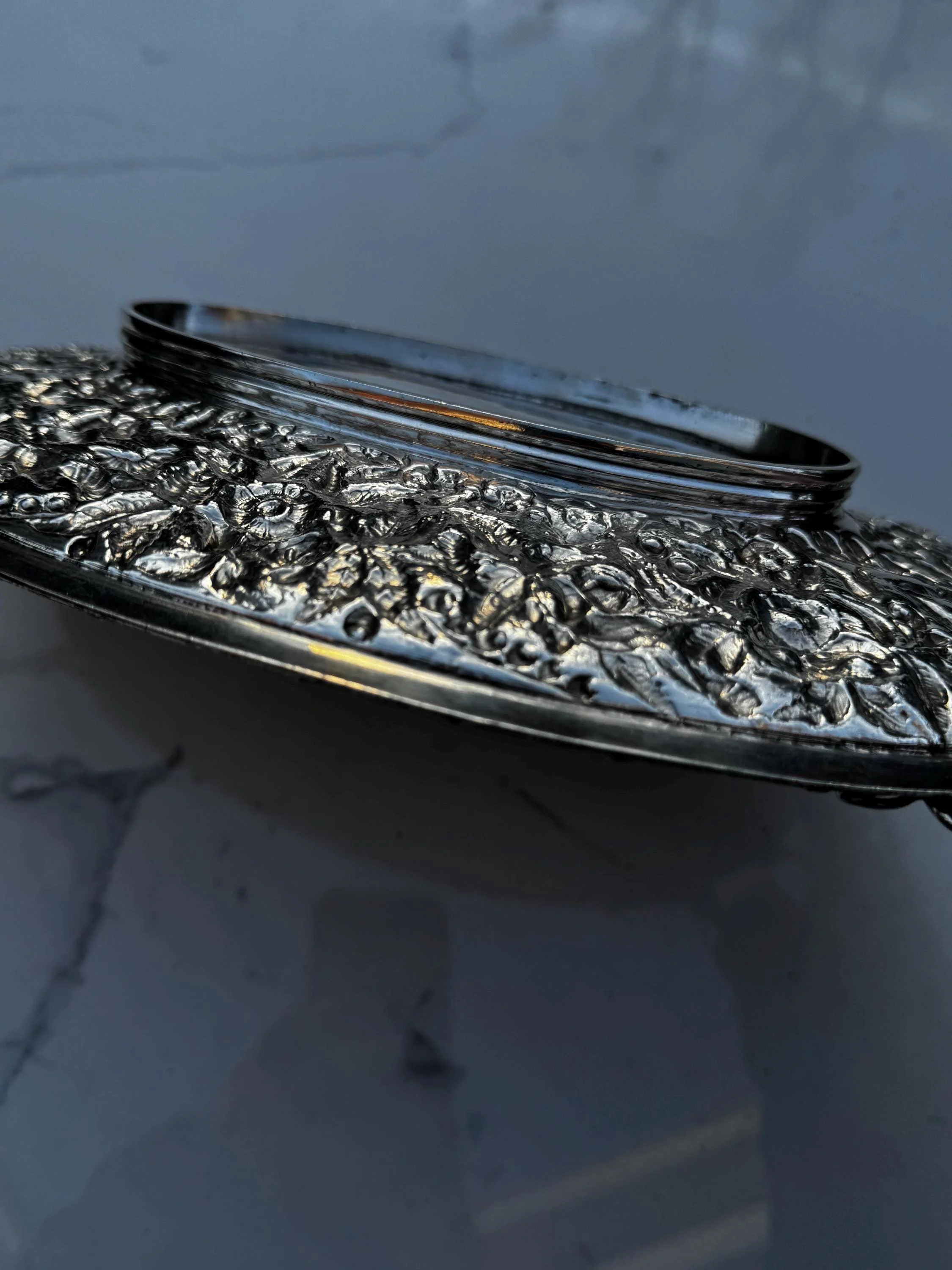
The gracefully proportioned oval body is rendered in fine gauge sterling and rises from a discreet applied ring foot, balancing elegant form with practical function. The central reserve is not monogrammed unlike many examples of Kirk's silver.
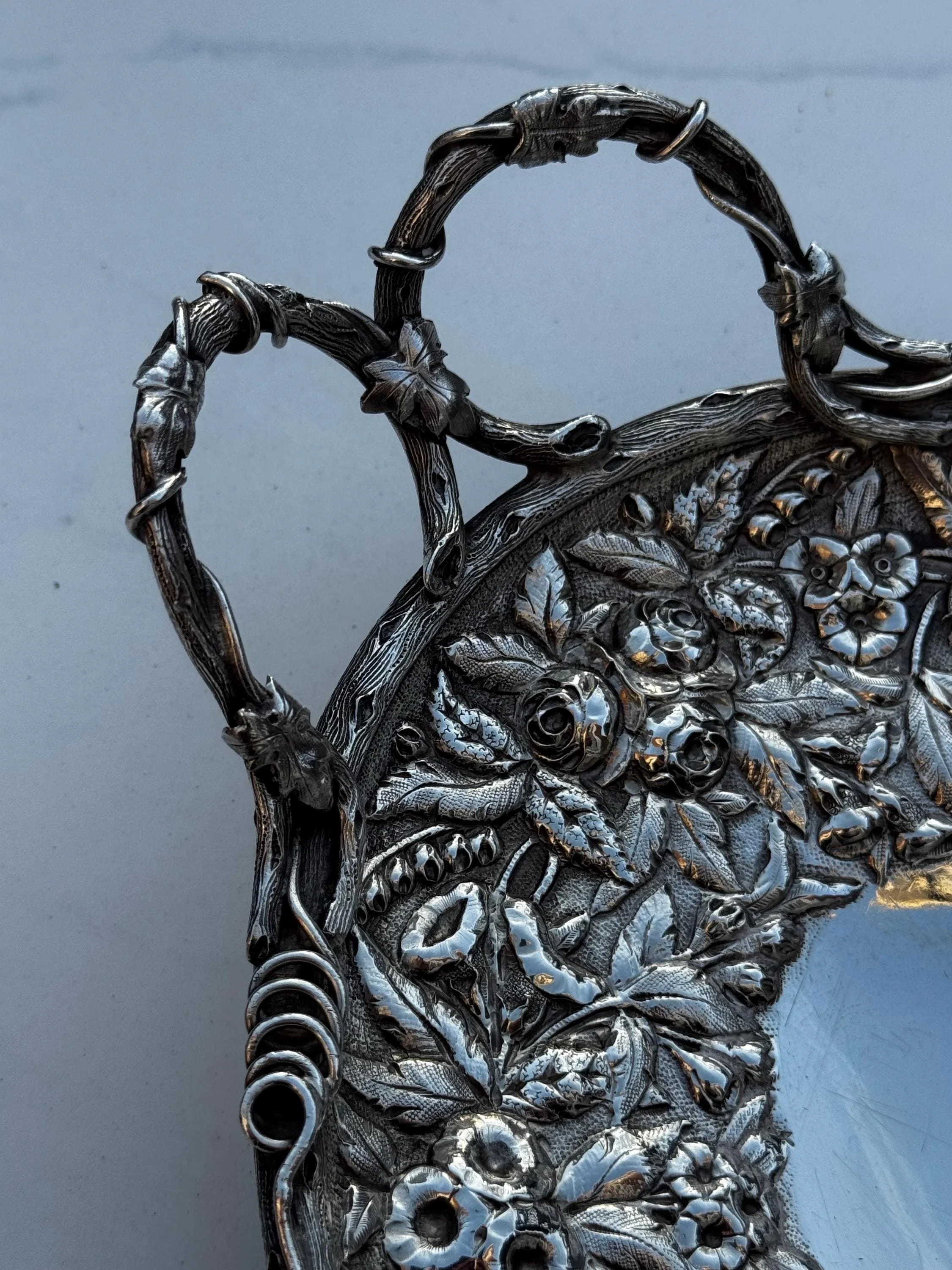
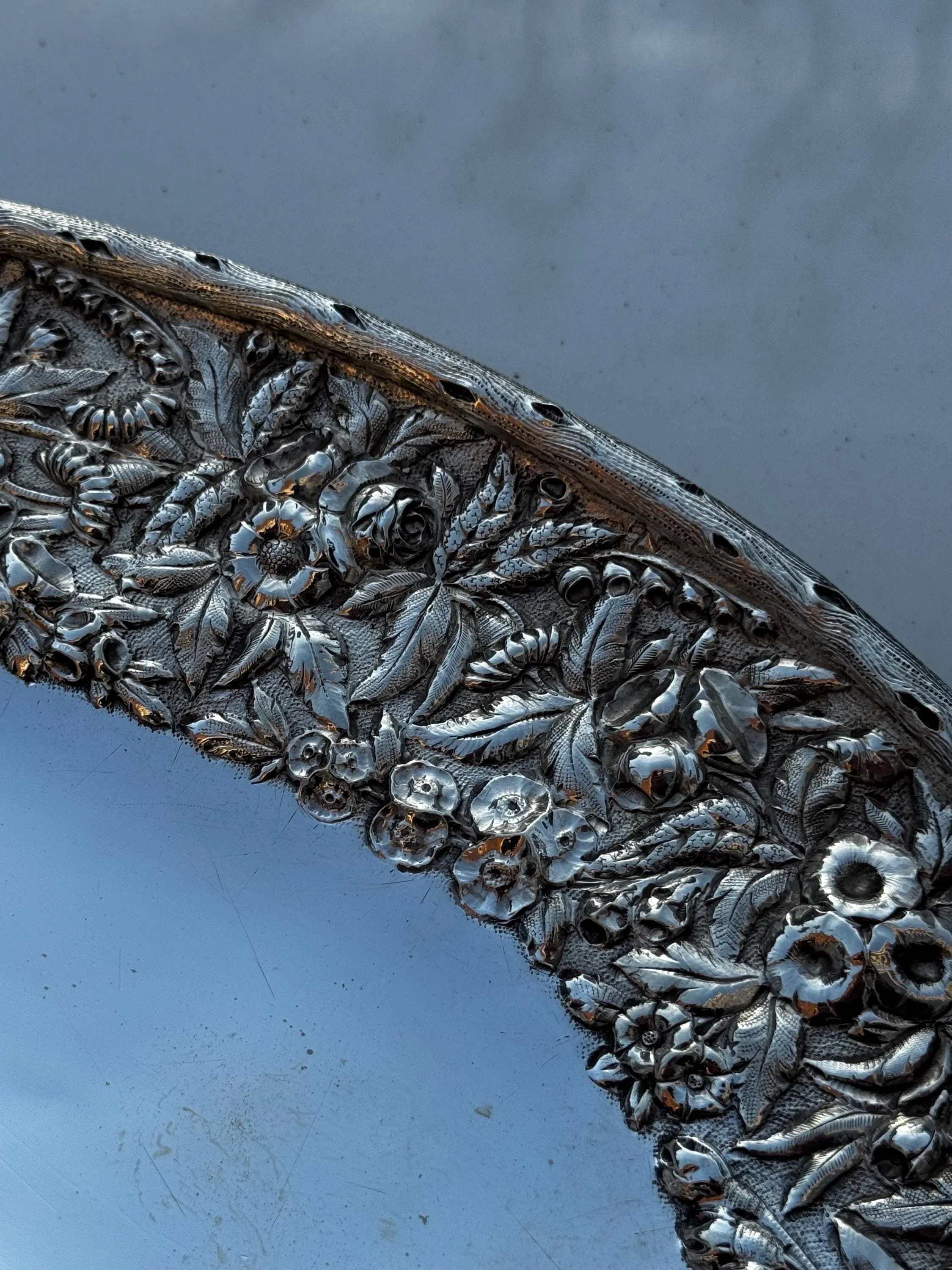
Richly chased floral and foliate repoussé envelops the shallow bowl, reflecting the silversmith’s mastery of surface articulation and depth. At either end, cast and applied double-loop handles, modeled as twisting grapevines with tendrils and leaves, exemplify the organic vitality and sculptural flair that defined S. Kirk & Son’s output in this period.
On 19th-century Baltimore silver — especially from S. Kirk & Son — the “11 OZ” stamp typically signifies that the piece was made from coin silver of approximately 91.6 % purity (11/12 parts silver), rather than modern sterling (92.5 % pure). This was part of the Baltimore Assay system and reflects the alloy composition, not the literal troy-ounce weight of the item. Foreign coins at that time (often French) with a fineness of 11/12 silver were a common source metal for making wares, and the assay convention led to the use of that 11 OZ mark on Baltimore coin silver pieces of this period.
Condition: Antique condition commensurate with age, presenting gentle wear and light surface marks consistent with use and careful stewardship.
Significance:
Samuel Kirk & Son was among America’s foremost silversmiths in the 19th century, celebrated for its repoussé silver — a technique involving intricate hand-chasing from the reverse to create richly textured relief decoration. Pieces such as this tray represent not only refined craftsmanship but also the evolution of American decorative arts as collectors and connoisseurs today continue to prize them.
8” x 13”
Check out some of my other US sterling silver here:
https://www.etsy.com/shop/DCSILVERSHOP?ref=shop_sugg§ion_id=19121632
Or just browse around the shop!
https://www.etsy.com/shop/DCSILVERSHOP